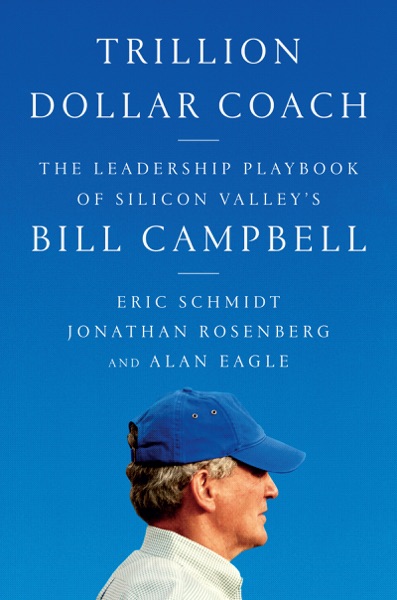
Trillion Dollar Coach
📖 About the book
Trillion Dollar Coach: The Leadership Playbook of Silicon Valley's Bill Campbell by Eric Schmidt, Jonathan Rosenberg, and Alan Eagle, published in 2019, explores the unique management philosophy of the man who mentored Steve Jobs, Larry Page, and Jeff Bezos. The authors argue that at the highest level, Coaching is the Heart of Management. This book provides a rigorous framework for building high-performing 'Community-Based' teams, emphasizing that the best way to achieve world-class results is by Putting People First.
The core methodology centers on The Team Over the Individual and the 'Operational Excellence' pillars. Campbell’s playbook includes techniques for 'Managing the Board,' 'Building Psychological Safety,' and Direct Feedback. The authors explain how to conduct 'Staff Meetings' that favor debate and details the importance of Relational Trust as the foundation of innovation. The focus is on moving from 'Command-and-Control' toward Supportive Guidance, where the manager's primary goal is the success of their subordinates.
Essential reading for CEOs, board members, and senior HR professionals. Readers gain concrete value by learning how to handle Interpersonal Conflict between high-ego executives. Practical applications include utilizing 'The Trip Report' to build rapport and implementing Principles of Meritocracy. By internalizing Campbell’s insights, leaders can build organizations that are more collaborative, resilient, and capable of creating trillions of dollars in value through the power of collective commitment and high-trust leadership.
💡 Key takeaways
Prioritize Team Psychological Safety as a core strategic asset, recognizing that high-stakes innovation requires an environment where people feel safe to take risks and be vulnerable.
Adopt the Coaching Mindset by dedicating your time to removing the barriers that block your team's success, ensuring that you are a guide rather than a dictator.
Focus on Operational Excellence in the basics—such as meeting agendas and one-on-ones—recognizing that these 'boring' habits are the primary drivers of institutional stability and scale.
❓ FAQ
Is "Trillion Dollar Coach" by Eric Schmidt et al. free to download?
Yes. BookHubs provides a free preview for "Trillion Dollar Coach". For the full legal text we link to OpenLibrary (Internet Archive), which is also free to read.
What is "Trillion Dollar Coach" about?
Free download of the guide to Bill Campbell's management playbook. Learn the principles that built Silicon Valley's giants through high-trust coaching.
How long does it take to read "Trillion Dollar Coach"?
At an average reading pace of ~250 words per minute, "Trillion Dollar Coach" (240 pages) takes roughly 360 minutes — about 6.0 hours. The 3 key takeaways on this page cover the core ideas in under 5 minutes.
What is the ISBN of "Trillion Dollar Coach"?
The ISBN of "Trillion Dollar Coach" by Eric Schmidt et al. is 978-0062839268, published by HarperBusiness.
📚 Related books
All books →
7 Habits of Highly Effective People
Stephen Covey

High Output Management
Andrew Grove

The Righteous Mind
Jonathan Haidt

Antifragile
Nassim Taleb

Business Model Generation
Osterwalder, Pigneur

Management
Peter Drucker