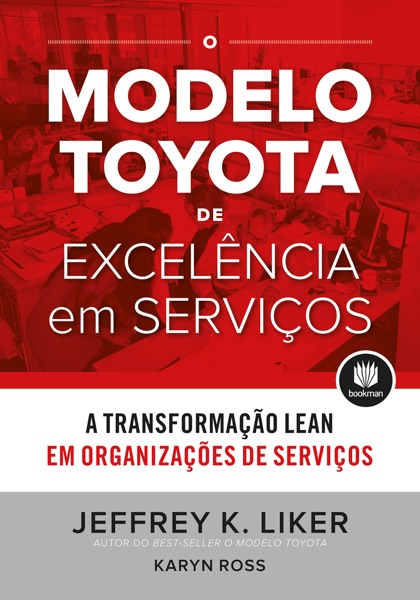
The Tao of Toyota
📖 About the book
The Tao of Toyota (drawing from Jeffrey Liker's deep research into Toyota's culture) explores the spiritual and philosophical heart of the Lean movement. Liker argues that many companies fail at Lean because they adopt the tools without the underlying mindset. This work focuses on the Leadership Behaviors and cultural habits that create an environment where the Toyota Production System can truly thrive. It emphasizes that Lean is not a project or a program, but a continuous journey of self-discipline and organizational learning.
The book delves into the concept of Respect for People, which Toyota considers as important as continuous improvement. Liker explains how Toyota develops Internal Leaders who understand the work intimately and can coach others in the 'way.' He discusses the importance of visual management and the 'Human-Machine Interface' (Jidoka), ensuring that technology serves the worker rather than replacing them. The framework stresses the need for a 'long-term orientation' and the courage to make decisions that may seem inefficient in the short term but protect the organization's health over decades.
This is crucial reading for mid-level managers and HR directors tasked with cultural transformation. Readers gain concrete value by learning how to move beyond 'Lean tools' toward Lean Thinking. Practical applications include developing mentoring programs based on the 'sensei' model and redesigning office spaces to improve Visual Control. By internalizing the 'Tao,' leaders can build a culture of resilience and humility that allows the organization to overcome any external shock through the collective efforts of its people, driving long-term market dominance.
💡 Key takeaways
Develop Lean Leadership by promoting managers from within who have a deep understanding of the work and are committed to coaching their teams daily.
Balance Continuous Improvement with a deep Respect for People, recognizing that your frontline employees are the primary source of competitive advantage and innovation.
Institutionalize Visual Management systems to ensure that any deviation from the standard work is immediately visible and can be corrected by the team on the spot.
❓ FAQ
Is "The Tao of Toyota" by Jeffrey Liker free to download?
Yes. BookHubs provides a free preview for "The Tao of Toyota". For the full legal text we link to OpenLibrary (Internet Archive), which is also free to read.
What is "The Tao of Toyota" about?
Download the guide to the heart of Lean for free. Discover the deeper leadership and cultural habits that sustain Toyota's excellence across generations.
How long does it take to read "The Tao of Toyota"?
At an average reading pace of ~250 words per minute, "The Tao of Toyota" (400 pages) takes roughly 600 minutes — about 10.0 hours. The 3 key takeaways on this page cover the core ideas in under 5 minutes.
What is the ISBN of "The Tao of Toyota"?
The ISBN of "The Tao of Toyota" by Jeffrey Liker is 978-0071753135, published by McGraw-Hill.
📚 Related books
All books →
7 Habits of Highly Effective People
Stephen Covey

High Output Management
Andrew Grove

The Righteous Mind
Jonathan Haidt

Antifragile
Nassim Taleb

Business Model Generation
Osterwalder, Pigneur

Management
Peter Drucker