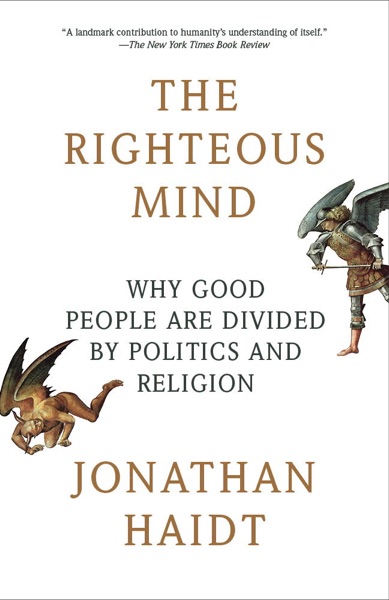
The Righteous Mind
📖 About the book
The Righteous Mind: Why Good People Are Divided by Politics and Religion by Jonathan Haidt, published in 2012, is a rigorous study of Moral Foundations Theory. Haidt argues that 'Intuition comes first, strategic reasoning second.' This book provides a framework for understanding Group Cohesion and Conflict, teaching leaders that morality is a team sport designed to 'bind and blind'—it binds groups together but blinds them to the truths of other groups.
The core methodology centers on the Six Moral Foundations: Care/Harm, Fairness/Cheating, Loyalty/Betrayal, Authority/Subversion, Sanctity/Degradation, and Liberty/Oppression. Haidt explains the Elephant and Rider metaphor for decision-making and details why Social Influence is the primary driver of organizational belief systems. He introduces the concept of Hive Leadership and provides strategies for bridging 'Moral Divides.' The focus is on moving from 'Logical Argument' toward Psychological Synchronization.
Mandatory reading for anyone leading diverse teams or navigating high-stakes public relations. Readers gain value by learning how to communicate across Ideological Silos. Practical applications include utilizing 'Moral Reframing' for strategic initiatives and implementing Inclusive Cultural Rituals. By internalizing Haidt’s insights, leaders can build organizations that are more unified and better prepared to handle the tribalism that often sabotages modern professional environments.
💡 Key takeaways
Apply Moral Foundations Theory to your organizational culture, ensuring that your firm’s mission resonates with all six foundational human values to maximize employee buy-in.
Address the Elephant (Intuition) First in your strategic communication, recognizing that people will only accept your logical arguments (the Rider) if they feel an emotional alignment with your goal.
Foster Hive-Level Cooperation within your team through shared symbols and common enemies (like market problems), utilizing the human biological drive for collective moral action.
❓ FAQ
Is "The Righteous Mind" by Jonathan Haidt free to download?
Yes. BookHubs provides a free preview for "The Righteous Mind". For the full legal text we link to OpenLibrary (Internet Archive), which is also free to read.
What is "The Righteous Mind" about?
Free download of the guide to moral psychology. Learn why people are divided by politics and religion and how to build cohesive teams with Jonathan Haidt.
How long does it take to read "The Righteous Mind"?
At an average reading pace of ~250 words per minute, "The Righteous Mind" (448 pages) takes roughly 672 minutes — about 11.2 hours. The 3 key takeaways on this page cover the core ideas in under 5 minutes.
What is the ISBN of "The Righteous Mind"?
The ISBN of "The Righteous Mind" by Jonathan Haidt is 978-0307455772, published by Vintage.
📚 Related books
All books →
7 Habits of Highly Effective People
Stephen Covey

High Output Management
Andrew Grove

Antifragile
Nassim Taleb

Business Model Generation
Osterwalder, Pigneur

Management
Peter Drucker

Out of the Crisis
W. Edwards Deming