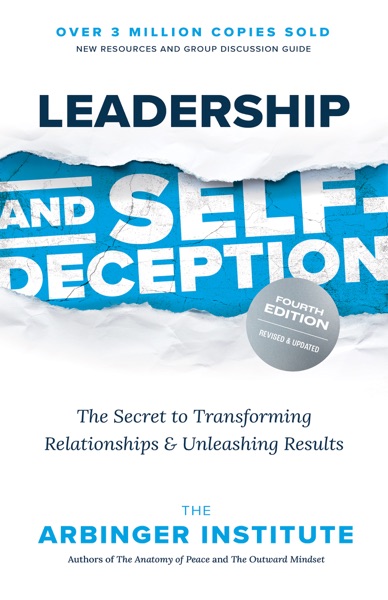
Leadership and Self-Deception
📖 About the book
Leadership and Self-Deception: Getting Out of the Box by The Arbinger Institute, published in 2000, is a rigorous exploration of Relational Ethics. The authors argue that the biggest problem in organizations is not lack of skill, but Self-Deception (being 'in the box')—when we see others as 'objects' rather than 'people' to justify our own betrayals of what we know is right. This work provides a framework for Outward Mindset Leadership, teaching individuals how to stop 'Inflating others' flaws' and how to take accountability for their impact on others.
The core methodology centers on the Cycle of Self-Betrayal and the 'Box' metaphor. The authors explain the importance of Collusion—how we intentionally provoke the very behaviors in others that we complain about—and detail the role of 'Self-Justification' in corporate conflict. They introduce the concept of the Human Perception of Impact and provides strategies for 'Getting Out of the Box.' The focus is on moving from 'Conflict-Reinforcement' toward Structural Collaboration.
Essential reading for anyone leading teams or managing difficult partnerships. Readers gain concrete value by learning how to Dissolve Personal Resentment. Practical applications include utilizing 'Outward Mindset Audits' for team dynamics and implementing Empathy-Based Accountability models. By mastering Arbinger’s logic, leaders can build organizations that are structurally more harmonious and effective because they are grounded in the honest and human treatment of every stakeholder.
💡 Key takeaways
Recognize Self-Deception ('The Box') as the primary cause of organizational friction, understanding that when you treat others as 'Objects', you systematically sabotage your firm’s strategic goals.
Break the Cycle of Collusion, recognizing your own role in the toxic dynamics of your team and taking the first step to change your mindset rather than waiting for others to change theirs.
Adopt an Outward Mindset, shifting your leadership focus from 'How am I doing?' to 'How is my work impacting others’ ability to succeed?' to drive superior collective performance.