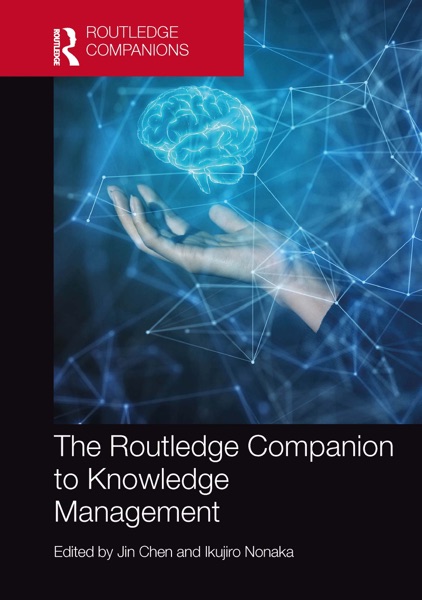
Knowledge Management
📖 About the book
Knowledge Management (reflecting the life's work of Ikujiro Nonaka) provides the definitive theoretical and practical framework for understanding how organizations learn and innovate. Nonaka, often cited as the most important management thinker in Japan, argues that the source of sustainable competitive advantage in a volatile world is not just information, but the continuous Creation of Knowledge. This work moves beyond the simple storage of data to explore the complex human dynamics of institutional wisdom and breakthroughs.
The core of Nonaka's methodology is the SECI Model of knowledge conversion, which describes the interaction between Tacit Knowledge (unspoken, experience-based) and Explicit Knowledge (documented, codified). The process moves through four stages: Socialization, Externalization, Combination, and Internalization. He introduces the concept of 'Ba'—the shared physical or virtual spaces where knowledge is created and exchanged. The framework highlights the critical role of the 'middle manager' as a knowledge engineer who bridges the gap between top-level vision and frontline reality.
This book is essential for R&D directors, HR executives, and innovation leads in high-tech and service sectors. Readers gain concrete value by learning how to tap into the 'hidden' expertise of their workforce to drive new product development. Practical applications include designing Community of Practice sessions and utilizing storytelling to capture and share organizational lessons. By implementing Nonaka’s knowledge spiral, organizations can transform themselves into dynamic learning entities that stay ahead of the technological and market curves.
💡 Key takeaways
Implement the SECI Model to systematically convert the subjective Tacit Knowledge of individual employees into documented, scalable Explicit Knowledge for the entire firm.
Create organizational 'Ba'—shared physical or digital spaces designed specifically to encourage the high-trust interaction required for rapid knowledge creation.
Foster a Knowledge Spiral by rewarding the sharing of personal insights and hunches, ensuring that local innovations are codified and spread across the entire organization.
❓ FAQ
Is "Knowledge Management" by Ikujiro Nonaka free to download?
Yes. BookHubs provides a free preview for "Knowledge Management". For the full legal text we link to OpenLibrary (Internet Archive), which is also free to read.
What is "Knowledge Management" about?
Download the guide to the SECI model for free. Master the art of knowledge creation and organizational learning to drive sustainable innovation.
How long does it take to read "Knowledge Management"?
At an average reading pace of ~250 words per minute, "Knowledge Management" (304 pages) takes roughly 456 minutes — about 7.6 hours. The 3 key takeaways on this page cover the core ideas in under 5 minutes.
What is the ISBN of "Knowledge Management"?
The ISBN of "Knowledge Management" by Ikujiro Nonaka is 978-0195092691, published by Oxford University Press.
📚 Related books
All books →
7 Habits of Highly Effective People
Stephen Covey

High Output Management
Andrew Grove

The Righteous Mind
Jonathan Haidt

Antifragile
Nassim Taleb

Business Model Generation
Osterwalder, Pigneur

Management
Peter Drucker