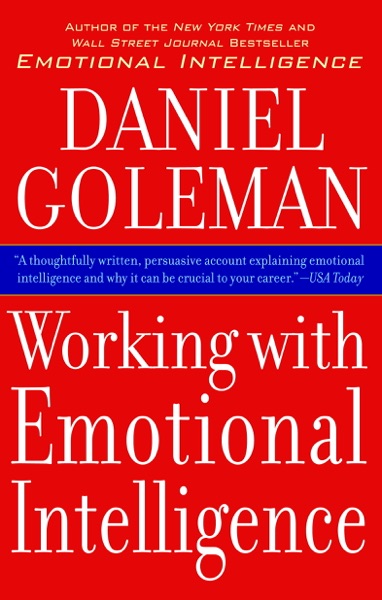
Working with Emotional Intelligence
📖 About the book
Working with Emotional Intelligence by Daniel Goleman, published in 1998, provides a data-driven look at how EQ impacts professional performance. While his first book was general, this work analyzes studies from over 500 organizations to prove that Emotional Skills account for 80% of the difference between top performers and average ones. This book serves as a practical handbook for employees and managers to develop the 'soft' skills that lead to 'hard' results in any modern career path.
The core methodology revolves around the Emotional Competence Framework, which divides skills into Personal Competence (Self-Awareness, Regulation) and Social Competence (Empathy, Relationship Management). Goleman details the importance of Change Catalyst and Conflict Management as critical skills for the knowledge economy. He explains how high-EQ teams outperform those with high-IQ individuals but low social cohesion. The framework stresses that organizations must prioritize emotional development in their training programs to remain competitive in a world of constant change.
This is crucial reading for career changers, HR directors, and high-potential managers. Readers gain concrete value by learning how to build their Political Awareness and influence without formal power. Practical applications include utilizing Self-Assessment Tools to identify professional blind spots and redesigning team-building exercises to focus on emotional rapport. By internalizing these workplace principles, professionals can accelerate their career progression and lead their organizations to higher levels of collaborative success and strategic agility.
💡 Key takeaways
Apply the Emotional Competence Framework to your professional development, focusing on the specific self-management and social skills that drive career advancement.
Improve your Conflict Management ability by utilizing emotional intelligence to de-escalate workplace tensions and find collaborative, win-win solutions.
Foster High-Performance Team Dynamics by focusing on social competence and rapport, ensuring that the collective intelligence of the group is not sabotaged by poor interpersonal relationships.
❓ FAQ
Is "Working with Emotional Intelligence" by Daniel Goleman free to download?
Yes. BookHubs provides a free preview for "Working with Emotional Intelligence". For the full legal text we link to OpenLibrary (Internet Archive), which is also free to read.
What is "Working with Emotional Intelligence" about?
Free download of Goleman's guide to professional EQ. Learn the emotional skills that predict career success and high-performance team dynamics.
How long does it take to read "Working with Emotional Intelligence"?
At an average reading pace of ~250 words per minute, "Working with Emotional Intelligence" (400 pages) takes roughly 600 minutes — about 10.0 hours. The 3 key takeaways on this page cover the core ideas in under 5 minutes.
What is the ISBN of "Working with Emotional Intelligence"?
The ISBN of "Working with Emotional Intelligence" by Daniel Goleman is 978-0553378580, published by Bantam Books.
📚 Related books
All books →
The 21 Irrefutable Laws of Leadership
John Maxwell

Dare to Lead
Brené Brown

How to Win Friends and Influence People
Dale Carnegie

Shoe Dog
Phil Knight

The Laws of Human Nature
Robert Greene

Think Again
Adam Grant