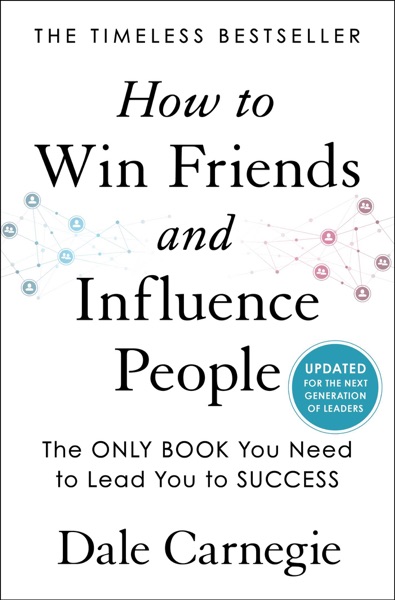
How to Win Friends and Influence People
📖 About the book
How to Win Friends and Influence People by Dale Carnegie, first published in 1936, remains the most influential book on Human Relations ever written. Carnegie argues that professional success is 15% technical knowledge and 85% the ability to lead and interact with people. This book provides a clear, principled framework for building high-trust relationships, de-escalating conflict, and persuading others without causing resentment, making it a cornerstone for modern leadership and sales training worldwide.
The core methodology centers on several fundamental principles: Don't Criticize, Condemn, or Complain; give honest and sincere appreciation; and arouse in the other person an eager want. Carnegie emphasizes the power of Active Listening and the importance of seeing things from the other person's perspective. He introduces techniques for 'winning people to your way of thinking,' such as letting the other person do a great deal of the talking and beginning in a friendly way. The focus is on moving from 'Coercion' toward Influential Cooperation through genuine empathy.
This book is mandatory reading for anyone in a customer-facing or leadership role. Readers gain value by learning the small, daily habits that build massive Relational Capital. Practical applications include utilizing the 'Yes, Yes' technique in negotiations and redesigning feedback sessions to focus on shared goals. By internalizing Carnegie’s timeless wisdom, leaders can build organizations where people feel valued and inspired, resulting in higher productivity, better morale, and sustained competitive advantage through superior people skills.
💡 Key takeaways
Practice Radical Appreciation by identifying and acknowledging the sincere strengths of your team members, which is the most effective way to inspire high performance and loyalty.
Master Empathetic Perspective-Taking by always seeking to understand the motives and needs of your stakeholders before attempting to persuade them to your strategic viewpoint.
Avoid Direct Criticism and instead use indirect methods to point out errors, ensuring that you preserve the other person’s dignity and maintain a collaborative work environment.
❓ FAQ
Is "How to Win Friends and Influence People" by Dale Carnegie free to download?
Yes. BookHubs provides a free preview for "How to Win Friends and Influence People". For the full legal text we link to OpenLibrary (Internet Archive), which is also free to read.
What is "How to Win Friends and Influence People" about?
Free download of Dale Carnegie's timeless classic. Master the essential social skills and principles to build relationships and influence others with integrity.
How long does it take to read "How to Win Friends and Influence People"?
At an average reading pace of ~250 words per minute, "How to Win Friends and Influence People" (288 pages) takes roughly 432 minutes — about 7.2 hours. The 3 key takeaways on this page cover the core ideas in under 5 minutes.
What is the ISBN of "How to Win Friends and Influence People"?
The ISBN of "How to Win Friends and Influence People" by Dale Carnegie is 978-0671027032, published by Simon & Schuster.


