Project Management
📖 About the book
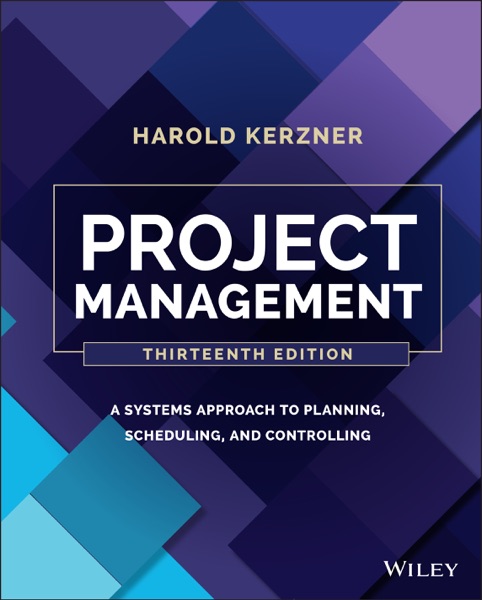
Project Management: A Systems Approach to Planning, Scheduling, and Controlling by Harold Kerzner, first published in 1979, is widely considered the 'bible' of the profession. Kerzner, a world-renowned expert, provides a comprehensive and rigorous manual that covers every phase of the project lifecycle. This book remains the primary reference for anyone preparing for PMP certification or looking to implement world-class Project Governance in an engineering, construction, or technology environment.
The core methodology centers on the Systems Approach, viewing projects as integrated components of the larger organizational strategy. Kerzner details the use of Work Breakdown Structures (WBS), Critical Path Method (CPM), and PERT charts for scheduling. He introduces the Project Management Maturity Model (PMMM), helping organizations assess and improve their internal project capabilities. He emphasizes the importance of 'Stakeholder Management' and the role of the 'Project Office' in ensuring consistent quality and risk mitigation across all initiatives.
Essential for project managers, engineers, and R&D directors. Readers gain concrete value by learning how to balance the 'Triple Constraint' of time, cost, and scope. Practical applications include utilizing Earned Value Management (EVM) to track financial performance and conducting formal 'Project Audits' to capture lessons learned. By mastering Kerzner’s disciplined framework, leaders can significantly increase their project success rates, delivering complex initiatives on time and within budget while maintaining alignment with corporate goals.
💡 Key takeaways
Manage the Triple Constraint—balancing time, cost, and scope—to ensure that your project delivers its promised value without exhausting organizational resources.
Utilize Earned Value Management (EVM) to objectively track project performance and predict final budget and schedule outcomes with high mathematical accuracy.
Implement the Project Management Maturity Model to systematically improve your organization’s internal systems, moving from ad-hoc planning to optimized, repeatable project success.
❓ FAQ
Is "Project Management" by Harold Kerzner free to download?
Yes. BookHubs provides a free preview for "Project Management". For the full legal text we link to OpenLibrary (Internet Archive), which is also free to read.
What is "Project Management" about?
Download the definitive 'bible' of project management for free. Master the systems approach to planning, scheduling, and controlling complex projects.
How long does it take to read "Project Management"?
At an average reading pace of ~250 words per minute, "Project Management" (848 pages) takes roughly 1272 minutes — about 21.2 hours. The 3 key takeaways on this page cover the core ideas in under 5 minutes.
What is the ISBN of "Project Management"?
The ISBN of "Project Management" by Harold Kerzner is 978-1119165354, published by Wiley.
📚 Related books
All books →
7 Habits of Highly Effective People
Stephen Covey

High Output Management
Andrew Grove

The Righteous Mind
Jonathan Haidt

Antifragile
Nassim Taleb

Business Model Generation
Osterwalder, Pigneur

Management
Peter Drucker