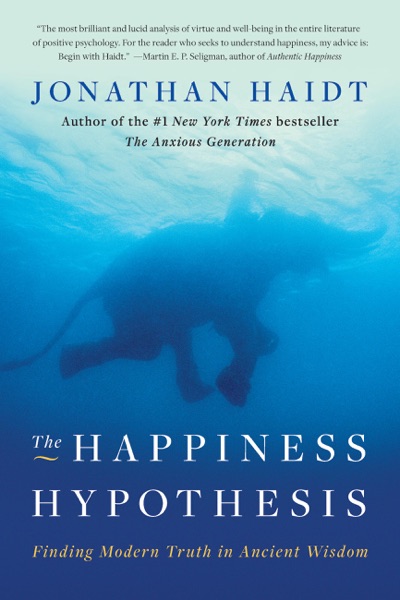
The Happiness Hypothesis
📖 About the book
The Happiness Hypothesis: Finding Modern Truth in Ancient Wisdom by Jonathan Haidt, published in 2006, is a rigorous synthesis of Ancient Philosophy and Modern Psychology. Haidt argues that our minds are like an 'Elephant' (instinct/emotion) and a 'Rider' (reason), and that the Rider's control is often an illusion. This work provides a framework for Psychological Balance, teaching leaders how to align their subconscious drives with their rational strategic goals to achieve meaningful fulfillment.
The methodology identifies Ten Great Ideas, including the importance of Reciprocity, the role of Adversity in growth, and the 'Happiness Formula' (H = S + C + V). Haidt explains the Adaptation Principle and details why 'External Success' has diminishing returns on satisfaction. He introduces the concept of The Hive Instinct (collective purpose) and provides strategies for 'Cultivating Virtue.' The focus is on moving from 'Self-Centeredness' toward Transcendent Flourishing.
Essential reading for high-achieving professionals and coaches. Readers gain value by learning how to manage Interpersonal Reciprocity. Practical applications include utilizing 'Adversity Audits' for resilience training and implementing Purpose-Driven Corporate Rituals. By internalizing Haidt’s hypothesis, leaders can develop a more sophisticated understanding of human nature, ensuring their organization supports both the 'Elephant' and the 'Rider' of every employee.
💡 Key takeaways
Master the Elephant and Rider Metaphor, recognizing that your organization's strategy (the Rider) will fail if it does not address the underlying emotional and social needs (the Elephant) of the workforce.
Utilize The Progress Principle, recognizing that the feeling of moving toward a goal is more rewarding than the goal itself, ensuring a focus on the 'Strategic Journey'.
Foster Hive-Like Cohesion through shared symbols and missions, tapping into the human biological drive for collective transcendence and high-trust cooperation.