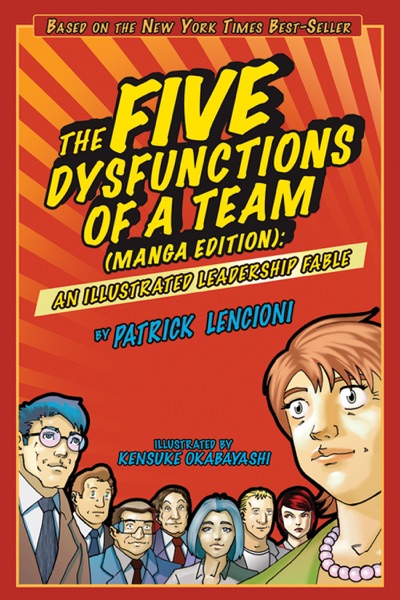
The Five Dysfunctions of a Team
📖 About the book
The Five Dysfunctions of a Team by Patrick Lencioni, published in 2002, is a foundational work on Group Dynamics. Through a narrative fable, Lencioni identifies the five interrelated barriers that prevent even the most talented teams from succeeding. This book provides a rigorous, Pyramid-Based Framework for individuals to diagnose and fix organizational issues, emphasizing that success is a result of Behavioral Discipline rather than just technical expertise or intellectual brilliance.
The core methodology identifies The Five Dysfunctions: Absence of Trust, Fear of Conflict, Lack of Commitment, Avoidance of Accountability, and Inattention to Results. Lencioni explains the importance of 'Vulnerability-Based Trust' and details how to encourage Productive Ideological Conflict. He introduces the concept of the Team Assessment and provides strategies for 'Cascading Communication.' The focus is on moving from 'Ego-Driven Agendas' toward Collective Commitment and shared strategic outcomes.
This is mandatory reading for anyone leading a group, from startup founders to Fortune 500 executives. Readers gain value by learning how to facilitate Tough Conversations and how to align team incentives. Practical applications include utilizing the 'Team Effectiveness Exercise' and implementing The First-Team Principle (your peers are your primary team). By mastering the Lencioni model, leaders can build highly resilient, high-performing teams that are capable of dominating their industry through superior collaboration and accountability.
💡 Key takeaways
Build Vulnerability-Based Trust by leading with your own admissions of weakness, which is the necessary foundation for all subsequent levels of team performance and collaboration.
Encourage Productive Conflict over ideas, recognizing that the absence of debate is a sign of 'Artificial Harmony' that hides deep organizational misalignment and poor decision-making.
Ensure Mutual Accountability by allowing team members to call each other out on performance and behavioral standards, reducing the need for constant managerial intervention.
❓ FAQ
Is "The Five Dysfunctions of a Team" by Patrick Lencioni free to download?
Yes. BookHubs provides a free preview for "The Five Dysfunctions of a Team". For the full legal text we link to OpenLibrary (Internet Archive), which is also free to read.
What is "The Five Dysfunctions of a Team" about?
Free download of the classic on team dynamics. Master the 5 levels of the Lencioni model to build trust, embrace conflict, and drive collective results.
How long does it take to read "The Five Dysfunctions of a Team"?
At an average reading pace of ~250 words per minute, "The Five Dysfunctions of a Team" (229 pages) takes roughly 344 minutes — about 5.7 hours. The 3 key takeaways on this page cover the core ideas in under 5 minutes.
What is the ISBN of "The Five Dysfunctions of a Team"?
The ISBN of "The Five Dysfunctions of a Team" by Patrick Lencioni is 978-0787960759, published by Jossey-Bass.
📚 Related books
All books →
Thinking in Systems
Donella Meadows

The Culture Code
Daniel Coyle

Leadership and the New Science
Margaret Wheatley

Multipliers
Liz Wiseman

No Rules Rules
Reed Hastings, Erin Meyer

Measure What Matters
John Doerr