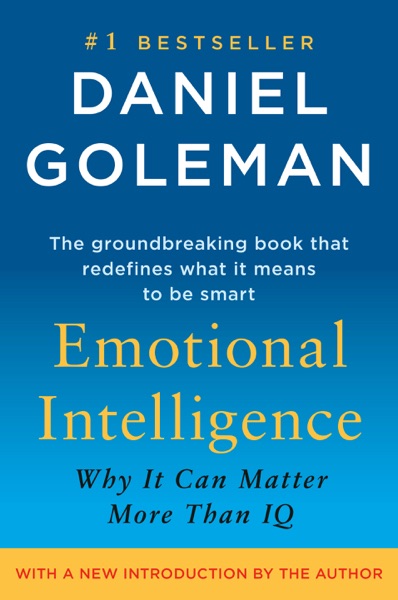
Emotional Intelligence
📖 About the book
Emotional Intelligence by Daniel Goleman, published in 1995, is a revolutionary work that fundamentally redefined the concept of human intelligence. Goleman, a psychologist and science journalist, argues that traditional IQ is a poor predictor of success in both life and leadership. This book introduced the global business community to the idea that our ability to manage emotions and social relationships is the primary driver of performance, making it one of the most influential management texts of the last 30 years.
The core methodology centers on the Five Components of EQ: Self-Awareness, Self-Regulation, Motivation, Empathy, and Social Skills. Goleman explains the neuroscience behind the Amygdala Hijack and how out-of-control emotions can sabotage rational decision-making. He provides a framework for Social Intelligence and details how high-EQ leaders create an environment of trust and psychological safety. The work emphasizes that emotional competencies are not fixed traits but skills that can be developed through deliberate practice and physiological understanding.
This book is mandatory reading for managers, educators, and anyone seeking professional growth. Readers gain value by learning how to stay calm under pressure and how to navigate the complex social dynamics of a modern workplace. Practical applications include utilizing Self-Regulation Techniques to manage stress and applying Empathy-Based Leadership to increase team engagement. By mastering emotional intelligence, leaders can improve their influence and build more resilient, high-performing teams capable of handling any strategic challenge.
💡 Key takeaways
Master the Five Components of EQ—Self-Awareness, Self-Regulation, Motivation, Empathy, and Social Skills—to provide a comprehensive foundation for personal and professional effectiveness.
Recognize and prevent the Amygdala Hijack by developing the self-awareness needed to pause and respond logically during high-stress strategic negotiations or conflicts.
Utilize Empathy-Based Leadership to understand the perspectives of your stakeholders, allowing for more persuasive communication and more effective team management.
❓ FAQ
Is "Emotional Intelligence" by Daniel Goleman free to download?
Yes. BookHubs provides a free preview for "Emotional Intelligence". For the full legal text we link to OpenLibrary (Internet Archive), which is also free to read.
What is "Emotional Intelligence" about?
Free download of Emotional Intelligence by Daniel Goleman. Learn why EQ matters more than IQ for career success and effective organizational leadership.
How long does it take to read "Emotional Intelligence"?
At an average reading pace of ~250 words per minute, "Emotional Intelligence" (384 pages) takes roughly 576 minutes — about 9.6 hours. The 3 key takeaways on this page cover the core ideas in under 5 minutes.
What is the ISBN of "Emotional Intelligence"?
The ISBN of "Emotional Intelligence" by Daniel Goleman is 978-0553375060, published by Bantam Books.
📚 Related books
All books →
The 21 Irrefutable Laws of Leadership
John Maxwell

Dare to Lead
Brené Brown

How to Win Friends and Influence People
Dale Carnegie

Shoe Dog
Phil Knight

The Laws of Human Nature
Robert Greene

Think Again
Adam Grant