Value Chain Management
📖 About the book
Value Chain Management (drawing from Michael Porter's seminal work in Competitive Advantage) is the definitive framework for analyzing the internal activities of a firm. Porter argues that competitive advantage cannot be understood by looking at a company as a whole; it must be found in the discrete activities a firm performs in designing, producing, marketing, and delivering its product. This work provides the tools for Activity-Based Strategy, allowing leaders to optimize their internal systems for either cost leadership or differentiation.
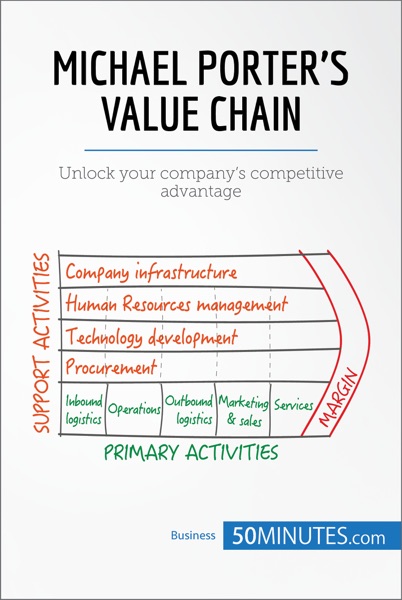
The methodology identifies Primary Activities (Inbound Logistics, Operations, Outbound Logistics, Marketing & Sales, Service) and Support Activities (Procurement, Technology Development, HR Management, Firm Infrastructure). Porter explains how these activities are linked and how Systemic Optimization can create a total value that is greater than the sum of its parts. He emphasizes the role of the 'Value System'—the interconnected value chains of the firm, its suppliers, and its customers—in determining total industry profitability.
Essential for COOs, operations managers, and industrial engineers. Readers gain concrete value by learning how to identify the specific Leverage Points where small process changes can yield massive profit gains. Real-world applications include utilizing Linkage Analysis to improve coordination between departments and redesigning the supply chain to reduce total cycle time. By mastering value chain management, organizations can move beyond generic strategy and build a unique, defensible operational engine that is difficult for rivals to replicate.
💡 Key takeaways
Deconstruct your organization into Primary and Support Activities to identify the specific sources of your firm's cost advantage or product differentiation.
Analyze the Linkages Between Activities within your value chain to find opportunities for systemic optimization that improve both speed and quality.
Optimize your Total Value System by coordinating with suppliers and distributors to reduce industry-wide waste and capture a greater share of market profit.