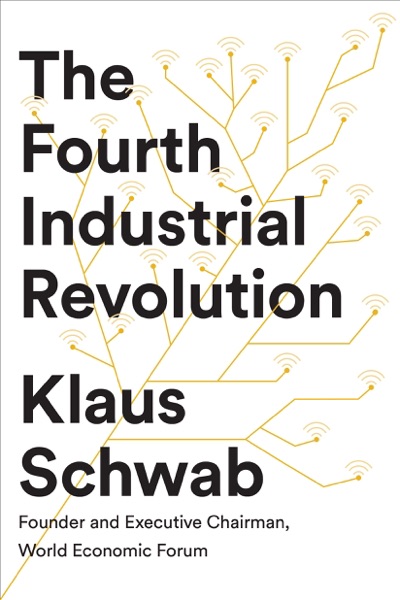
The Fourth Industrial Revolution
by Klaus Schwab
📖 About the book
The Fourth Industrial Revolution by Klaus Schwab, Founder and Executive Chairman of the World Economic Forum, is the definitive guide to Systemic Global Shift. Schwab argues that we are currently undergoing a revolution that is distinct from the previous three in its velocity, scope, and systems impact. This work provides a rigorous framework for individuals to navigate the Fusion of Technologies across the physical, digital, and biological spheres, fundamentally changing how governments, businesses, and individuals operate.
The core methodology centers on Systems Leadership and the analysis of 'Mega-Trends' like 3D printing, the Internet of Things (IoT), and Gene Editing. Schwab explains the concept of Disruption of the Status Quo and details the role of 'Agile Governance.' He introduces the concept of the Shift in Identity and provides strategies for managing the 'Inequality Gap.' The focus is on moving from 'Isolated Innovation' toward Holistic Stakeholder Capitalism, where the goal is to ensure that the revolution benefits all of society.
This is mandatory reading for CEOs, board members, and senior policy makers. Readers gain unparalleled depth in understanding Structural Economic Change. Practical applications include utilizing Cross-Industry Collaborations to solve complex problems and implementing 'Scenario-Based Strategic Planning' for a multi-polar world. By mastering Schwab’s logic, leaders can ensure their organizations are not just survivors of the fourth revolution, but active architects of a more inclusive and resilient global future.
💡 Key takeaways
Adopt a Systems Leadership Approach, recognizing that the Fourth Industrial Revolution is defined by the interaction between technologies rather than any single innovation.
Implement Agile Governance within your organization, creating the flexibility needed to regulate and respond to rapid technological shifts that outpace traditional legal frameworks.
Focus on Stakeholder Capitalism, ensuring that your firm’s strategic growth is aligned with broader social and environmental well-being to maintain a long-term license to operate.
❓ FAQ
Is "The Fourth Industrial Revolution" by Klaus Schwab free to download?
Yes. BookHubs provides a free preview for "The Fourth Industrial Revolution". For the full legal text we link to OpenLibrary (Internet Archive), which is also free to read.
What is "The Fourth Industrial Revolution" about?
Free download of the WEF guide to global change. Learn how to lead through the fusion of physical, digital, and biological worlds with Klaus Schwab.
How long does it take to read "The Fourth Industrial Revolution"?
At an average reading pace of ~250 words per minute, "The Fourth Industrial Revolution" (192 pages) takes roughly 288 minutes — about 4.8 hours. The 3 key takeaways on this page cover the core ideas in under 5 minutes.
What is the ISBN of "The Fourth Industrial Revolution"?
The ISBN of "The Fourth Industrial Revolution" by Klaus Schwab is 978-1524758868, published by Currency.
📚 Related books
All books →
The Age of Spiritual Machines
Ray Kurzweil

Superintelligence: Paths, Dangers, Strategies
Nick Bostrom

The Singularity Is Nearer
Ray Kurzweil

Abundance
Peter Diamandis, Steven Kotler

Life 3.0
Max Tegmark

Life 3.0: Being Human in the Age of Artificial Intelligence
Max Tegmark