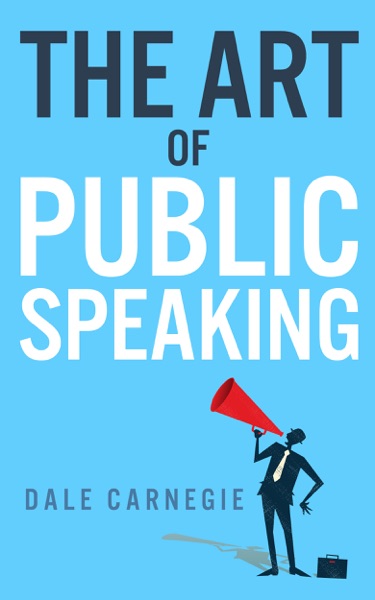
The Art of Public Speaking
📖 About the book
The Art of Public Speaking (co-authored by Dale Carnegie and J. Berg Esenwein) is a foundational text in the field of Rhetoric and Communication. Published long before Carnegie’s more famous works, this book provides the technical and philosophical groundings for modern persuasion. The authors argue that public speaking is the primary tool for leadership, requiring a blend of logic, emotion, and disciplined delivery to move the hearts and minds of a workforce or a market.
The book details the Mechanics of Influence, including pitch, pace, and pause. It emphasizes the concept of Thought-Presence—the ability to be fully engaged with the audience rather than reciting a script. Carnegie and Esenwein explain the role of 'Illustration' and 'Analogy' in making complex ideas accessible and introduce frameworks for Persuasive Argumentation. The focus is on building a 'Sympathetic Atmosphere' where the speaker and the audience are aligned, ensuring that the strategic message is not only heard but also felt and acted upon.
This is crucial reading for managers, social entrepreneurs, and anyone in a position of public influence. Readers gain value by learning the Principles of Vocal Authority and how to structure speeches for maximum impact. Practical applications include utilizing 'narrative hooks' for board meetings and redesigning corporate announcements to be more engaging. By mastering these timeless rhetorical arts, leaders can elevate their professional presence and lead their organizations through the power of clear, compelling, and inspired communication.
💡 Key takeaways
Master Thought-Presence by focusing entirely on the transmission of your ideas rather than your self-consciousness, allowing for more authentic and authoritative leadership communication.
Utilize Analogy and Illustration to simplify complex strategic concepts, ensuring that your vision is understood and embraced by all levels of the organization.
Apply the Principles of Vocal Dynamics—including pitch and timing—to maintain audience attention and emphasize the most critical components of your strategic message.
❓ FAQ
Is "The Art of Public Speaking" by Dale Carnegie free to download?
Yes. BookHubs provides a free preview for "The Art of Public Speaking". For the full legal text we link to OpenLibrary (Internet Archive), which is also free to read.
What is "The Art of Public Speaking" about?
Free download of the classic guide to rhetoric. Master the art of persuasion and public delivery to lead and inspire your organization.
How long does it take to read "The Art of Public Speaking"?
At an average reading pace of ~250 words per minute, "The Art of Public Speaking" (400 pages) takes roughly 600 minutes — about 10.0 hours. The 3 key takeaways on this page cover the core ideas in under 5 minutes.
What is the ISBN of "The Art of Public Speaking"?
The ISBN of "The Art of Public Speaking" by Dale Carnegie is 978-1612930213, published by Home Correspondence School.
📚 Related books
All books →
The 21 Irrefutable Laws of Leadership
John Maxwell

Dare to Lead
Brené Brown

How to Win Friends and Influence People
Dale Carnegie

Shoe Dog
Phil Knight

The Laws of Human Nature
Robert Greene

Think Again
Adam Grant