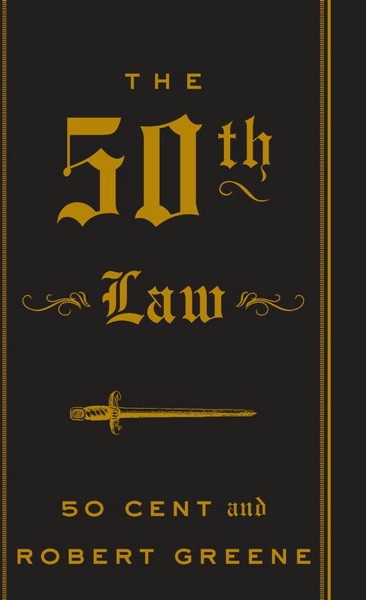
The 50th Law
📖 About the book
The 50th Law by Robert Greene and 50 Cent (Curtis Jackson), published in 2009, is a unique exploration of Fearlessness as a strategic asset. Greene argues that the greatest barrier to success is not the lack of talent or resources, but the internal fear that paralyzes decision-making. By analyzing 50 Cent's rise from the streets to the boardroom, the book provides a rigorous framework for navigating chaotic environments where traditional rules no longer apply, emphasizing that power belongs to those who embrace reality as it is.
The core methodology identifies Ten Tenets of Fearlessness, including 'Intense Realism,' 'Self-Reliance,' and 'Opportunism.' Greene explains how to develop a Fearless Mindset by confronting unpleasant truths and maintaining an aggressive posture in the face of adversity. He introduces the concept of the Tactical Hustle—the ability to pivot rapidly and turn a losing situation into a victory. The focus is on moving from a 'Consumer' to a 'Producer' mentality, where one creates their own opportunities rather than waiting for permission from the establishment.
Essential reading for entrepreneurs, artists, and leaders in volatile industries. Readers gain concrete value by learning how to eliminate the Dependency Trap and how to build a reputation for being 'untouchable.' Practical applications include utilizing 'radical self-reliance' in career planning and redesigning professional networks to favor Direct Action. By mastering the 50th law, individuals can develop the mental toughness needed to dominate their niche and remain calm while competitors are panicking during market shifts.
💡 Key takeaways
Adopt a state of Intense Realism by stripping away your illusions and emotional biases, allowing you to see market threats and opportunities as they truly exist.
Practice Radical Self-Reliance, recognizing that your ultimate security comes from your own skills and adaptability rather than the stability of any single institution.
Utilize the Opportunistic Mindset to transform negative events into strategic fuel, ensuring that every organizational setback becomes a launchpad for innovation.
❓ FAQ
Is "The 50th Law" by Robert Greene, 50 Cent free to download?
Yes. BookHubs provides a free preview for "The 50th Law". For the full legal text we link to OpenLibrary (Internet Archive), which is also free to read.
What is "The 50th Law" about?
Free download of The 50th Law. Master the art of fearlessness and learn how to turn any obstacle into a strategic advantage with Robert Greene.
How long does it take to read "The 50th Law"?
At an average reading pace of ~250 words per minute, "The 50th Law" (304 pages) takes roughly 456 minutes — about 7.6 hours. The 3 key takeaways on this page cover the core ideas in under 5 minutes.
What is the ISBN of "The 50th Law"?
The ISBN of "The 50th Law" by Robert Greene, 50 Cent is 978-0061774607, published by HarperStudio.
📚 Related books
All books →
Atomic Habits
James Clear

Can't Hurt Me
David Goggins

Ego Is the Enemy
Ryan Holiday

Influence
Robert Cialdini

Man's Search for Meaning
Viktor Frankl

Never Split the Difference
Chris Voss