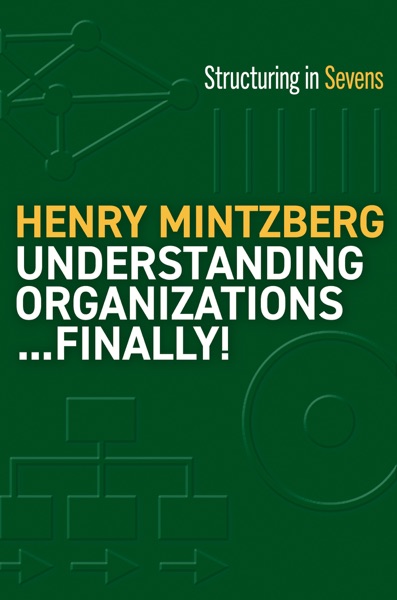
Structure in Fives
📖 About the book
Structure in Fives: Designing Effective Organizations by Henry Mintzberg, published in 1983, is a foundational text in organizational theory. Mintzberg, a world-leading authority on management, argues that an organization's structure is not arbitrary but a result of its environment, technology, and strategy. This book provides a rigorous framework for understanding how different parts of a company interact and how to design a structure that is both efficient and aligned with its core purpose, influencing generations of managers and consultants.
The book identifies Five Basic Parts of the organization: the Strategic Apex, the Middle Line, the Operating Core, the Technostructure, and the Support Staff. Mintzberg describes Five Structural Configurations—Simple Structure, Machine Bureaucracy, Professional Bureaucracy, Divisionalized Form, and Adhocracy. He explains how organizations 'coordinate' work through mechanisms like direct supervision or standardization of skills. He emphasizes that Strategic Alignment occurs when the structure fits the specific demands of the market, whether it requires extreme stability or rapid, creative adaptation.
This is essential reading for organizational designers, HR directors, and senior executives navigating corporate growth. Readers gain value by learning how to diagnose structural misalignments that lead to inefficiency or conflict. Practical applications include identifying the right Span of Control for different departments and choosing a structural model that supports innovation in 'adhocracies' or efficiency in 'bureaucracies.' By mastering Mintzberg’s configurations, leaders can build organizations that are structurally sound and capable of executing their strategy with maximum clarity and speed.
💡 Key takeaways
Identify which of the Five Structural Configurations—such as Adhocracy or Machine Bureaucracy—best fits your organization’s specific market environment and strategic goals.
Balance the roles of the Strategic Apex and the Technostructure to ensure that long-term vision is supported by standardized, efficient processes without stifling frontline initiative.
Utilize the appropriate Coordinating Mechanism, such as standardization of outputs or mutual adjustment, based on the complexity and unpredictability of your team's tasks.
❓ FAQ
Is "Structure in Fives" by Henry Mintzberg free to download?
Yes. BookHubs provides a free preview for "Structure in Fives". For the full legal text we link to OpenLibrary (Internet Archive), which is also free to read.
What is "Structure in Fives" about?
Download Henry Mintzberg's classic on organizational design for free. Learn the five basic configurations and how to structure your company for success.
How long does it take to read "Structure in Fives"?
At an average reading pace of ~250 words per minute, "Structure in Fives" (312 pages) takes roughly 468 minutes — about 7.8 hours. The 3 key takeaways on this page cover the core ideas in under 5 minutes.
What is the ISBN of "Structure in Fives"?
The ISBN of "Structure in Fives" by Henry Mintzberg is 978-0138543402, published by Prentice Hall.
📚 Related books
All books →
7 Habits of Highly Effective People
Stephen Covey

High Output Management
Andrew Grove

The Righteous Mind
Jonathan Haidt

Antifragile
Nassim Taleb

Business Model Generation
Osterwalder, Pigneur

Management
Peter Drucker