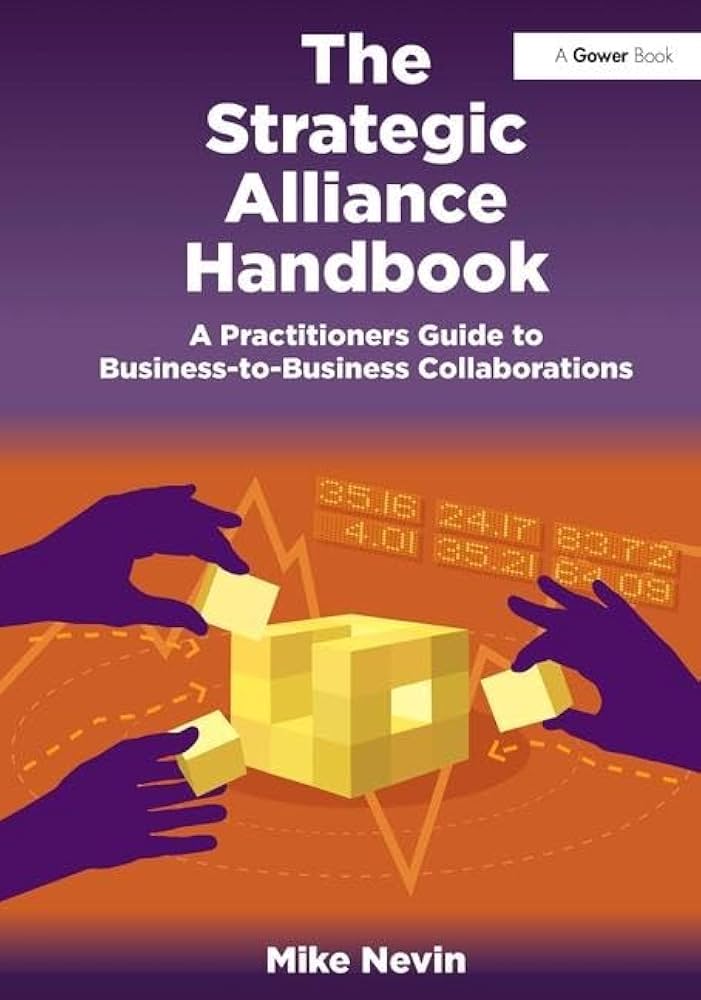
Strategic Alliances
by Yves Doz
📖 About the book
Strategic Alliances (reflecting the work of Yves Doz on Alliance Advantage) is a groundbreaking exploration of how organizations collaborate to achieve what they cannot do alone. Doz, a professor at INSEAD, argues that in a globalized economy, the ability to build and manage partnerships is a core Strategic Capability. This book provides a rigorous framework for navigating the delicate balance of competition and cooperation, showing that most alliances fail not because of bad strategy, but because of poor 'interface management' and cultural misalignment.
The core methodology centers on the Alliance Lifecycle, which includes stages of negotiation, design, management, and evolution. Doz emphasizes the importance of Collaborative Advantage, where the partnership creates new value that neither firm could capture independently. He introduces the concept of the Interface Manager, the critical role responsible for bridging the gap between two different corporate cultures and processes. He also details specific techniques for managing 'knowledge transfer' and protecting core intellectual property while sharing enough information to ensure the alliance’s success.
This is essential reading for business development officers, global strategists, and senior negotiators. Readers gain value by learning how to design Flexible Alliance Contracts that can evolve with the market. Practical applications include utilizing Cultural Due Diligence before signing a deal and implementing 'health checks' to monitor the partnership’s performance. By mastering the dynamics of strategic alliances, leaders can expand their market reach, share the risks of innovation, and build a more resilient and interconnected global business model.
💡 Key takeaways
Achieve Collaborative Advantage by designing alliances where the combined resources of the partners create unique value that is inaccessible to either firm working alone.
Implement a rigorous Interface Management process to handle the cultural and operational frictions that naturally occur between two different organizations in a partnership.
Foster Strategic Flexibility by creating alliance structures that allow for continuous learning and adaptation as market conditions and partner goals shift over time.