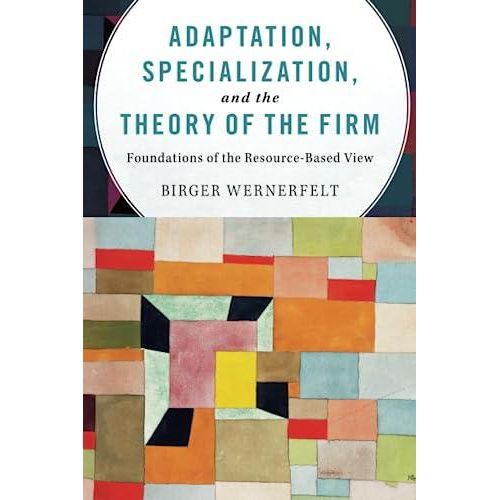
Resource-Based View of the Firm
by J. Barney
📖 About the book
Resource-Based View of the Firm (reflecting Jay Barney's seminal 1991 research and later expansions) represents a major shift in strategic thought. Barney contends that the 'outside-in' approach of industry analysis is incomplete. Instead, he proposes that a firm's unique Bundle of Resources—including tangible assets, human skills, and organizational processes—is the primary reason for performance differences between companies. This work provides the theoretical foundation for viewing the corporation as a collection of capabilities rather than a portfolio of products.
The book explores the conditions for Resource Heterogeneity and Resource Immobility, arguing that if all firms had the same resources, competition would result in zero economic profit. Barney details how Competitive Advantage emerges from resources that are valuable and rare. He focuses heavily on the concept of 'Social Complexity' and 'Causal Ambiguity,' explaining why it is often impossible for outsiders to understand exactly how a successful company operates, which serves as a powerful barrier against imitation by larger or better-funded rivals.
Essential for R&D directors, HR executives, and corporate strategists. Readers gain value by learning how to move beyond generic strategies and build a unique Capability-Based Strategy. Practical applications include utilizing internal resource mapping to identify gaps in talent or technology and prioritizing investments in 'non-tradable' assets. By internalizing the RBV perspective, leaders can ensure that their organization is built on a solid, internal foundation of unique strengths that can be adapted to various market opportunities over time.
💡 Key takeaways
Focus on building a Bundle of Unique Resources that are both valuable and rare, ensuring that your organization has strengths that are not easily acquired by rivals.
Leverage Causal Ambiguity to protect your strategic secrets, making it difficult for competitors to identify exactly which internal factors are driving your success.
Prioritize the development of Socially Complex Resources, such as high-trust relationships and a strong organizational culture, which are the most defensible sources of advantage.
❓ FAQ
Is "Resource-Based View of the Firm" by J. Barney free to download?
Yes. BookHubs provides a free preview for "Resource-Based View of the Firm". For the full legal text we link to OpenLibrary (Internet Archive), which is also free to read.
What is "Resource-Based View of the Firm" about?
Download Jay Barney's essential guide to internal strategy for free. Learn how to build a competitive edge through internal resources and capabilities.
How long does it take to read "Resource-Based View of the Firm"?
At an average reading pace of ~250 words per minute, "Resource-Based View of the Firm" (336 pages) takes roughly 504 minutes — about 8.4 hours. The 3 key takeaways on this page cover the core ideas in under 5 minutes.
What is the ISBN of "Resource-Based View of the Firm"?
The ISBN of "Resource-Based View of the Firm" by J. Barney is 978-0199251483, published by Oxford University Press.
📚 Related books
All books →
7 Habits of Highly Effective People
Stephen Covey

High Output Management
Andrew Grove

The Righteous Mind
Jonathan Haidt

Antifragile
Nassim Taleb

Business Model Generation
Osterwalder, Pigneur

Management
Peter Drucker