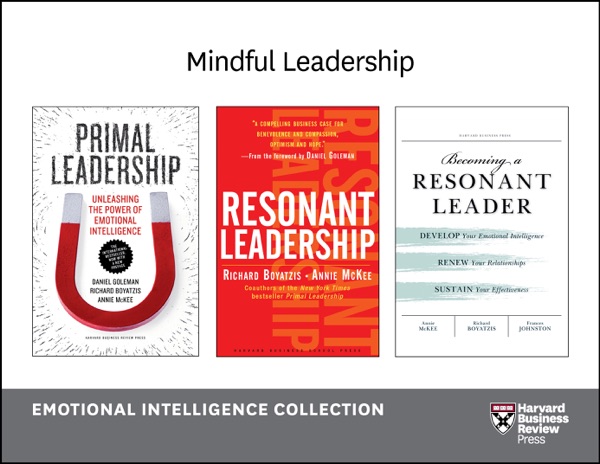
Resonant Leadership
📖 About the book
Resonant Leadership by Daniel Goleman, Richard Boyatzis, and Annie McKee, published in 2005, explores the concept of leadership that is in 'tune' with the needs and emotions of the group. The authors argue that a leader’s primary task is to create Resonance—a reservoir of positive energy that frees the best in people. This book provides a rigorous framework for sustaining leadership excellence over the long term, acknowledging that the constant pressure of the role often leads to burnout and 'Dissonant Leadership.'
The core methodology centers on the use of Mindfulness, Hope, and Compassion as the three pillars of sustainable leadership. The authors explain how resonant leaders manage the Stress Response and utilize 'Emotional Self-Management' to remain calm and effective in crises. They introduce the concept of the Sacrifice Syndrome, where leaders give so much to their roles that they lose their own effectiveness. The framework provides techniques for renewal and self-discovery, emphasizing that resonance is the only way to drive sustained organizational performance in a high-pressure environment.
Essential for senior executives, healthcare administrators, and leaders in high-stress industries. Readers gain value by learning how to recognize the early signs of leadership fatigue and how to restore their Emotional Energy. Practical applications include utilizing Mindfulness Practices for decision-making and creating 'Compassion-Based Feedback' systems that build team loyalty. By building resonance, leaders can ensure that their organizations remain innovative, engaged, and capable of weathering long-term strategic challenges without losing their core motivation.
💡 Key takeaways
Build Resonant Relationships with your team by leading with empathy and authenticity, creating a positive emotional climate that inspires peak performance.
Avoid the Sacrifice Syndrome by incorporating regular cycles of renewal and mindfulness into your professional life, preventing leadership burnout and decision fatigue.
Foster a culture of Mindfulness, Hope, and Compassion to keep your workforce focused on the future and emotionally committed to the organization's long-term vision.
❓ FAQ
Is "Resonant Leadership" by Goleman, Boyatzis, McKee free to download?
Yes. BookHubs provides a free preview for "Resonant Leadership". For the full legal text we link to OpenLibrary (Internet Archive), which is also free to read.
What is "Resonant Leadership" about?
Free download of Resonant Leadership. Learn how to lead with mindfulness and empathy to create a positive organizational climate and sustain high performance.
How long does it take to read "Resonant Leadership"?
At an average reading pace of ~250 words per minute, "Resonant Leadership" (304 pages) takes roughly 456 minutes — about 7.6 hours. The 3 key takeaways on this page cover the core ideas in under 5 minutes.
What is the ISBN of "Resonant Leadership"?
The ISBN of "Resonant Leadership" by Goleman, Boyatzis, McKee is 978-1591395690, published by Harvard Business Review Press.
📚 Related books
All books →
The 21 Irrefutable Laws of Leadership
John Maxwell

Dare to Lead
Brené Brown

How to Win Friends and Influence People
Dale Carnegie

Shoe Dog
Phil Knight

The Laws of Human Nature
Robert Greene

Think Again
Adam Grant