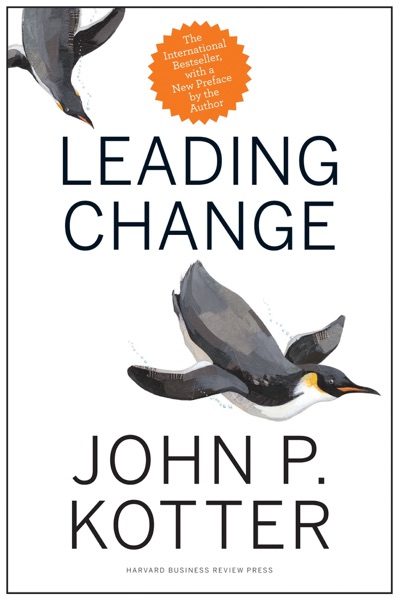
Managing Change
by John Kotter
📖 About the book
Managing Change by John Kotter (drawing from his extensive body of research and the classic HBR on Managing Change) is a vital resource for leaders navigating the friction of organizational transition. Kotter, the world's foremost authority on the subject, argues that most change initiatives fail not due to bad strategy, but because leaders fail to manage the Human Dynamics of the process. This work provides a rigorous framework for driving large-scale shifts in culture, technology, and business models while maintaining operational stability.
The core methodology centers on the Eight-Step Process for Leading Change, emphasizing the critical need to establish a Sense of Urgency before attempting any structural reform. Kotter details the importance of creating a Guiding Coalition—a diverse group of influential leaders who can champion the vision across departmental silos. He explores the concept of 'Broad-Based Empowerment,' where managers remove the psychological and bureaucratic obstacles that prevent employees from acting on new strategic directions. The focus is on moving the organization from a state of complacency to a culture of continuous adaptation.
This is essential reading for CEOs, change agents, and HR directors in industries facing rapid disruption. Readers gain concrete value by learning how to communicate a 'Vision for Change' that actually resonates with the workforce. Practical applications include utilizing Short-Term Wins to silence cynics and building the mechanisms to anchor new behaviors in the Corporate Culture. By following Kotter’s disciplined approach, leaders can significantly increase their success rates in executing complex transformations, ensuring their organization emerges stronger and more agile.
💡 Key takeaways
Initiate transformation by building a Sense of Urgency, ensuring that the majority of stakeholders understand that the cost of the status quo is higher than the risk of change.
Empower your workforce by systematically identifying and removing Structural Barriers—such as outdated policies or resistant hierarchies—that block the implementation of your new vision.
Anchor new practices in the Corporate Culture by explicitly linking improved business results to the new behaviors, ensuring the organization does not regress once the pressure of change subsides.