Introverted Leadership
📖 About the book
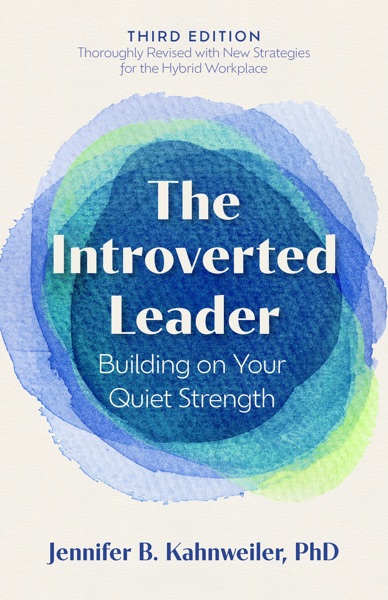
Introverted Leadership (reflecting the work on The Introverted Leader: Building on Your Quiet Strength) by Jennifer Kahnweiler, published in 2009, addresses a massive blind spot in management: the bias toward extroversion. Kahnweiler, an executive coach, argues that introverts have a unique set of Quiet Strengths—such as deep listening, preparation, and calm—that are essential for success in a complex global economy. This book provides a rigorous framework for introverts to lead authentically without trying to mimic the 'loud' leadership style of their peers.
The core methodology centers on the 4P Process: Prepare, Presence, Push, and Practice. Kahnweiler explains how to use Strategic Preparation to manage the drain of social interaction and provides techniques for 'Leading from a Distance.' She introduces the concept of the Quiet Influence and details how introverts can excel in networking, meetings, and public speaking by leveraging their natural focus and observational skills. The focus is on moving beyond 'faking it' toward building a leadership style that is sustainable, authentic, and highly effective.
Essential reading for introverted managers and HR directors looking to build more inclusive leadership pipelines. Readers gain value by learning how to navigate Organizational Politics without compromising their integrity. Practical applications include utilizing 1-on-1s for deep strategic alignment and redesigning team meetings to allow time for reflection. By mastering the 4P process, introverted leaders can achieve significant results and earn the respect of their teams by being the 'calm in the center of the storm,' ensuring long-term institutional stability.
💡 Key takeaways
Implement the 4P Process (Prepare, Presence, Push, Practice) to manage your energy and maximize your leadership impact in extrovert-dominated business environments.
Leverage Quiet Influence by using deep listening and thoughtful reflection to build high-trust relationships and drive strategic consensus within your management team.
Utilize Strategic Preparation as your primary competitive advantage, ensuring that you always enter high-stakes meetings with superior data and well-reasoned alternatives.
❓ FAQ
Is "Introverted Leadership" by Jennifer Kahnweiler free to download?
Yes. BookHubs provides a free preview for "Introverted Leadership". For the full legal text we link to OpenLibrary (Internet Archive), which is also free to read.
What is "Introverted Leadership" about?
Free download of the guide to the Introverted Leader. Learn how to leverage your natural quiet strengths to lead with high-impact in an extroverted world.
How long does it take to read "Introverted Leadership"?
At an average reading pace of ~250 words per minute, "Introverted Leadership" (184 pages) takes roughly 276 minutes — about 4.6 hours. The 3 key takeaways on this page cover the core ideas in under 5 minutes.
What is the ISBN of "Introverted Leadership"?
The ISBN of "Introverted Leadership" by Jennifer Kahnweiler is 978-1605090140, published by Berrett-Koehler Publishers.
📚 Related books
All books →
The 21 Irrefutable Laws of Leadership
John Maxwell

Dare to Lead
Brené Brown

How to Win Friends and Influence People
Dale Carnegie

Shoe Dog
Phil Knight

The Laws of Human Nature
Robert Greene

Think Again
Adam Grant