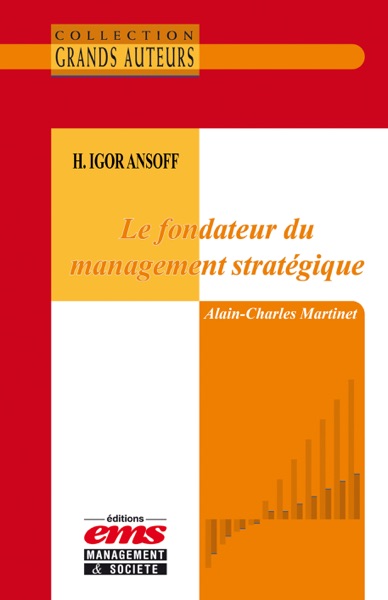
Corporate Strategy
by Igor Ansoff
📖 About the book
Corporate Strategy by Igor Ansoff, published in 1965, is the foundational text of strategic management. Ansoff, often called the father of strategic planning, was the first to provide a rigorous, systematic framework for how a firm should decide which markets to enter and which products to develop. This book moved strategy from a vague concept to a precise managerial discipline, introducing the analytical tools that continue to guide corporate growth and diversification strategies in boardrooms worldwide.
The book's most enduring contribution is the Ansoff Matrix (or Product/Market Growth Matrix). It outlines four distinct strategies for growth: Market Penetration (selling existing products to existing markets), Market Development (new markets for existing products), Product Development (new products for existing markets), and Diversification (new products for new markets). Ansoff also introduces the concept of Synergy (the "2+2=5" effect) and the importance of Strategic Gap Analysis to identify the difference between current performance and desired long-term goals.
Essential for corporate development officers, strategic planners, and senior executives. Readers gain concrete value by learning how to objectively evaluate growth opportunities and manage the risks associated with diversification. Real-world applications include using the Ansoff Matrix to prioritize R&D investments and conducting synergy audits during mergers and acquisitions. By applying Ansoff's systematic approach, leaders can move beyond haphazard growth and develop a cohesive corporate strategy that maximizes long-term shareholder value and competitive strength.
💡 Key takeaways
Utilize the Ansoff Matrix to categorize and evaluate your growth opportunities across market penetration, product development, market development, and diversification.
Perform a Strategic Gap Analysis to quantify the difference between your organization's projected results and its desired long-term strategic objectives.
Calculate Synergy Potential (the 2+2=5 effect) when considering new ventures or acquisitions to ensure the combined entity creates more value than the separate parts.
❓ FAQ
Is "Corporate Strategy" by Igor Ansoff free to download?
Yes. BookHubs provides a free preview for "Corporate Strategy". For the full legal text we link to OpenLibrary (Internet Archive), which is also free to read.
What is "Corporate Strategy" about?
Download Igor Ansoff's foundational text on corporate growth for free. Master the Ansoff Matrix and strategies for diversification and market penetration.
How long does it take to read "Corporate Strategy"?
At an average reading pace of ~250 words per minute, "Corporate Strategy" (226 pages) takes roughly 339 minutes — about 5.7 hours. The 3 key takeaways on this page cover the core ideas in under 5 minutes.
What is the ISBN of "Corporate Strategy"?
The ISBN of "Corporate Strategy" by Igor Ansoff is 978-0070021112, published by McGraw-Hill.
📚 Related books
All books →
7 Habits of Highly Effective People
Stephen Covey

High Output Management
Andrew Grove

The Righteous Mind
Jonathan Haidt

Antifragile
Nassim Taleb

Business Model Generation
Osterwalder, Pigneur

Management
Peter Drucker