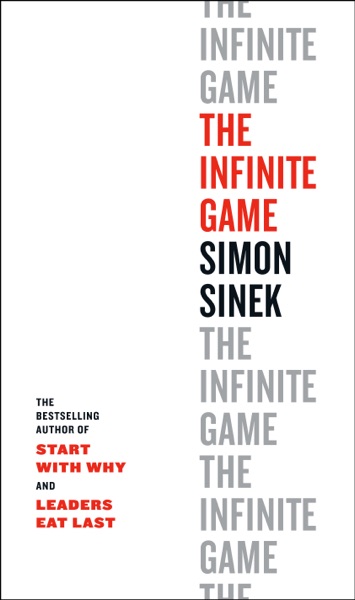
The Infinite Game
by Simon Sinek
📖 About the book
The Infinite Game by Simon Sinek, published in 2019, is a rigorous application of Game Theory (James Carse) to organizational leadership. Sinek argues that business is an 'Infinite Game'—where there are no winners or losers, only those who drop out and those who keep playing. This book provides a framework for the Infinite Mindset, teaching leaders how to prioritize longevity, resilience, and ethical purpose over the 'Short-Termism' of quarterly targets and competitive obsession.
The methodology identifies The Five Essential Practices: Advance a Just Cause, Build Trusting Teams, Study your Worthy Rivals, Prepare for Existential Flexibility, and Demonstrate the Courage to Lead. Sinek explains the importance of Existential Flexibility—the ability to disrupt your own successful business model to save your mission—and details the role of 'Ethical Fading' in corporate decay. The focus is on moving from 'Beating the Competition' toward Sustaining the Mission.
Essential reading for founders, military leads, and C-suite executives. Readers gain concrete value by learning how to Build High-Morale Cultures. Practical applications include utilizing 'The Just Cause Check' for strategic pivots and implementing Vulnerable Leadership rituals to build trust. By mastering the Infinite Game, leaders can ensure their organization outlasts its rivals by focusing on a future that transcends the current market cycle.
💡 Key takeaways
Adopt an Infinite Mindset, recognizing that your organization's primary strategic goal is to stay in the game and continue fulfilling its mission for generations rather than 'winning' a temporary cycle.
Cultivate Existential Flexibility, ensuring that your organization is brave enough to completely pivot its tactical operations if the current market environment makes the pursuit of your 'Just Cause' impossible.
View competitors as Worthy Rivals, using their strengths to identify your own organization's weaknesses and to drive continuous internal improvement rather than engaging in zero-sum warfare.