The Big Short
📖 About the book
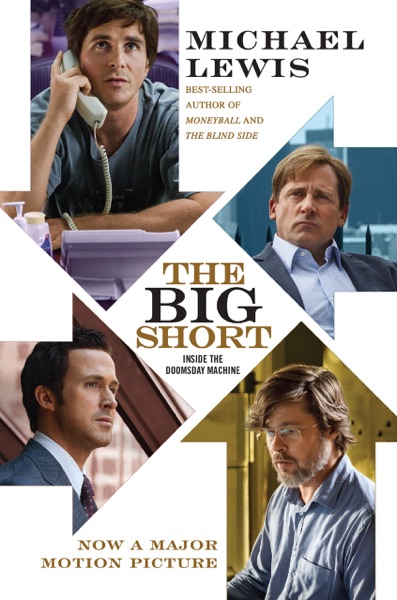
The Big Short: Inside the Doomsday Machine by Michael Lewis, published in 2010, is a rigorous and narrative-driven exploration of The 2008 Subprime Mortgage Collapse. Lewis argues that the crisis was caused by a combination of 'Systemic Blindness' and 'Incentive Distortion' in the banking industry. This work provides a framework for Contrarian Strategic Thought, following the handful of 'Outsiders' who bet against the market by seeing the truth behind the opaque 'Collateralized Debt Obligations' (CDOs).
The methodology identifies concepts like The Credit Default Swap (CDS) as an Insurance Policy and the role of 'Rating Agency Failure.' Lewis explains the importance of First Principles Investigation and details why 'The Crowd' is often wrong during the peak of a mania. He introduces the concept of the Institutional Delusion and provide strategies for 'Identifying Opaque Risks.' The focus is on moving from 'Standard Consensus' toward Aggressive Fact-Checking.
Essential reading for any leader responsible for large capital allocations. Readers gain value by learning how to Bet against the Herd. Practical applications include utilizing 'Underlying Asset Audits' and implementing Skepticism as a Corporate Value. By Mastering the Big Short logic, leaders can build organizations that are capable of seeing through the 'Wall Street Narrative' to protect their assets from the next massive 'Doomsday Machine.'
💡 Key takeaways
Prioritize First-Hand Data Investigation, ensuring your organization’s biggest strategic bets are based on the reality of the 'Underlying Assets' rather than on the opinions of rating agencies or experts.
Cultivate Contrarian Bravery, recognizing that the most significant strategic opportunities often require you to stand alone and bet against the 'Collective Blindness' of the market.
Understand The Danger of Complexity as Obfuscation, recognizing that when a financial product or business model is too complex to be easily explained, it often hides systemic fragility and loss.
❓ FAQ
Is "The Big Short" by Michael Lewis free to download?
Yes. BookHubs provides a free preview for "The Big Short". For the full legal text we link to OpenLibrary (Internet Archive), which is also free to read.
What is "The Big Short" about?
Free download of the story of the 2008 financial crisis. Learn the lessons of contrarian thinking and systemic blindness with Michael Lewis.
How long does it take to read "The Big Short"?
At an average reading pace of ~250 words per minute, "The Big Short" (288 pages) takes roughly 432 minutes — about 7.2 hours. The 3 key takeaways on this page cover the core ideas in under 5 minutes.
What is the ISBN of "The Big Short"?
The ISBN of "The Big Short" by Michael Lewis is 978-0393338829, published by W. W. Norton & Company.
📚 Related books
All books →
Margin of Safety
Seth Klarman

Misbehaving
Richard H. Thaler

Poor Charlie's Almanack
Charlie Munger

The Intelligent Investor
Benjamin Graham

Think and Grow Rich
Napoleon Hill

The Wealth of Nations
Adam Smith