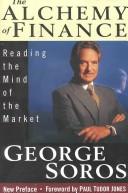
The Alchemy of Finance
by George Soros
📖 About the book
The Alchemy of Finance by George Soros, published in 1987, is a profound philosophical and practical exploration of Global Markets. Soros, one of the most successful speculators in history, argues that traditional economic theories of equilibrium are flawed because they ignore the role of human perception. This book provides a rigorous framework for Reflexivity—the idea that participants' views influence the situation they participate in, which in turn influences their views, creating self-reinforcing feedback loops that drive boom-bust cycles.
The core methodology centers on the Theory of Reflexivity and the analysis of 'Far-from-Equilibrium' conditions. Soros explains how to identify Macro-Trends and details his 'Real-Time Experiment' during the 1980s. He introduces the concept of the Fallibility of Human Knowledge and provide strategies for managing 'High-Conviction Bets.' The focus is on moving from 'Passive Forecasting' toward Active Intervention, where the investor seeks to understand and exploit the gap between reality and market perception to achieve superior strategic results.
This is mandatory reading for hedge fund managers, global macro strategists, and senior policy makers. Readers gain unparalleled depth in understanding Market Instability and currency dynamics. Practical applications include utilizing 'Feedback Loop Mapping' to anticipate market bubbles and implementing Dynamic Risk Management during periods of extreme volatility. By mastering Soros’s alchemy, leaders can build organizations that are more responsive to global shifts and capable of achieving extraordinary returns through a deep understanding of psychological-economic interactions.
💡 Key takeaways
Apply the Theory of Reflexivity to your market analysis, recognizing that your organization's own strategic actions can fundamentally alter the competitive landscape you operate in.
Identify Self-Reinforcing Feedback Loops in your industry, allowing you to anticipate the rapid acceleration of trends and the inevitable corrections that follow market excesses.
Embrace Intellectual Fallibility as a core strategic value, constantly questioning your own assumptions to remain flexible and responsive when reality deviates from your forecasts.
❓ FAQ
Is "The Alchemy of Finance" by George Soros free to download?
Yes. BookHubs provides a free preview for "The Alchemy of Finance". For the full legal text we link to OpenLibrary (Internet Archive), which is also free to read.
What is "The Alchemy of Finance" about?
Free download of George Soros' investment classic. Master the Theory of Reflexivity and learn how to navigate complex global markets.
How long does it take to read "The Alchemy of Finance"?
At an average reading pace of ~250 words per minute, "The Alchemy of Finance" (384 pages) takes roughly 576 minutes — about 9.6 hours. The 3 key takeaways on this page cover the core ideas in under 5 minutes.
What is the ISBN of "The Alchemy of Finance"?
The ISBN of "The Alchemy of Finance" by George Soros is 978-0471042068, published by Wiley.
📚 Related books
All books →
Margin of Safety
Seth Klarman

Misbehaving
Richard H. Thaler

Poor Charlie's Almanack
Charlie Munger

The Big Short
Michael Lewis

The Intelligent Investor
Benjamin Graham

Think and Grow Rich
Napoleon Hill