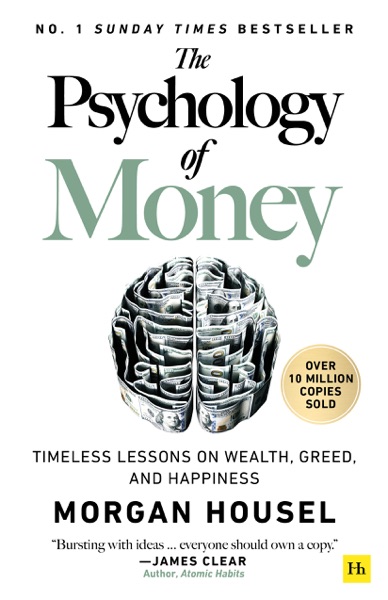
The Psychology of Money
📖 About the book
The Psychology of Money: Timeless Lessons on Wealth, Greed, and Happiness by Morgan Housel, published in 2020, is a rigorous study of Financial Behavior. Housel argues that doing well with money has little to do with how smart you are and a lot to do with how you behave. This book provides a framework for Cognitive Wealth Management, teaching leaders that financial success is not a 'hard science' but a 'soft skill' where ego, emotion, and history drive the most critical decisions.
The methodology identifies 19 Short Stories that illustrate the quirks of human nature and capital. Housel explains the importance of Compounding and Survival—staying in the game long enough for the math to work—and details the role of 'Tail Events' in investment returns. He introduces the concept of the Inner Scorecard and providing strategies for 'Defining Enough.' The focus is on moving from 'Analytical Optimizing' toward Reasonable, Low-Stress Financial Stability.
Essential reading for retail investors, startup founders, and high-net-worth individuals. Readers gain value by learning how to eliminate the Envy and Greed that lead to catastrophic risk. Practical applications include utilizing 'Margin of Safety' in personal budgeting and implementing Long-Term Time Horizons for organizational reserves. By mastering Housel’s logic, leaders can build a more stable and autonomous life, ensuring their capital serves their goals rather than their anxieties.
💡 Key takeaways
Prioritize Survival over Gains in your financial strategy, recognizing that the most powerful force in wealth creation is 'Uninterrupted Compounding,' which requires never being forced to exit the market.
Understand the Role of Luck and Risk, maintaining strategic humility when things go well and avoiding self-blame when market 'Tail Events' cause unforeseen organizational setbacks.
Define 'Enough' for your organization and yourself, recognizing that the relentless pursuit of more at the cost of your primary mission often leads to the destruction of what you already have.