Outliers
📖 About the book
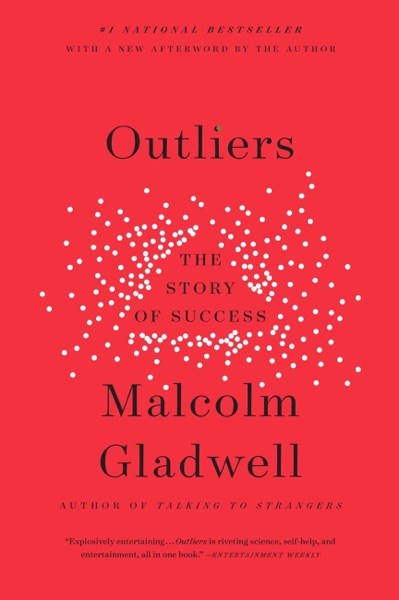
Outliers: The Story of Success by Malcolm Gladwell, published in 2008, investigates the hidden factors that contribute to high-level achievement. Gladwell argues that success is not merely a product of individual talent or ambition, but a result of Cultural Context, timing, and cumulative advantage. This book provides a rigorous framework for leaders to identify and nurture 'outlier' talent by understanding the social and historical systems that produce world-class performance in diverse fields.
The book details the famous 10,000-Hour Rule—the idea that mastery requires an enormous amount of deliberate practice. Gladwell introduces the concepts of Arbitrary Advantages (like birth dates) and 'Legacy,' explaining how cultural background (such as power-distance index) impacts communication and safety in industries like aviation. He emphasizes the role of Opportunity and 'Meaningful Work,' arguing that greatness is a collective achievement. The focus is on moving from a 'Hero-Myth' toward a Systemic View of Talent, where organizations create the conditions for excellence to emerge.
Essential reading for HR directors, educators, and CEOs looking to build high-performance pipelines. Readers gain value by learning how to recognize 'hidden' potential that traditional metrics miss. Practical applications include utilizing Cohort-Based Training to maximize practice time and redesigning Diversity Initiatives to address cultural communication styles. By mastering Gladwell’s systemic logic, leaders can build organizations that are more equitable and effective at scaling individual talent into institutional dominance.
💡 Key takeaways
Implement the 10,000-Hour Rule of deliberate practice within your organization by providing your high-potential employees with the time and resources needed for true mastery.
Analyze the Cultural Legacy of your team members to understand how their background influences their willingness to speak up, helping you to build a safer and more vocal workforce.
Recognize Systemic Advantages in your talent identification process, focusing on an individual's trajectory and opportunities rather than just their current 'innate' performance levels.
❓ FAQ
Is "Outliers" by Malcolm Gladwell free to download?
Yes. BookHubs provides a free preview for "Outliers". For the full legal text we link to OpenLibrary (Internet Archive), which is also free to read.
What is "Outliers" about?
Free download of the guide to the story of success. Learn the roles of culture, timing, and the 10,000-hour rule in building world-class high-performers.
How long does it take to read "Outliers"?
At an average reading pace of ~250 words per minute, "Outliers" (304 pages) takes roughly 456 minutes — about 7.6 hours. The 3 key takeaways on this page cover the core ideas in under 5 minutes.
What is the ISBN of "Outliers"?
The ISBN of "Outliers" by Malcolm Gladwell is 978-0316017923, published by Little, Brown and Company.
📚 Related books
All books →
Atomic Habits
James Clear

Can't Hurt Me
David Goggins

Ego Is the Enemy
Ryan Holiday

Influence
Robert Cialdini

Man's Search for Meaning
Viktor Frankl

Never Split the Difference
Chris Voss