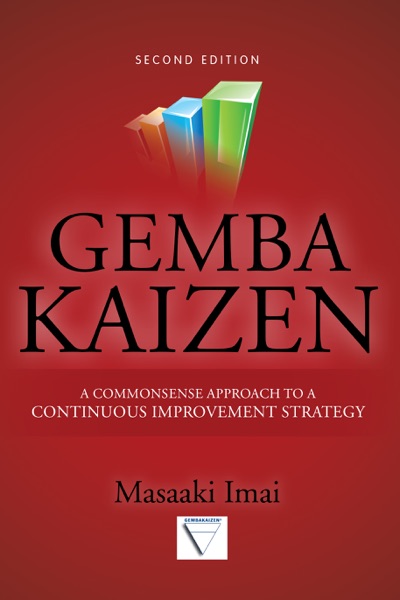
Kaizen
by Masaaki Imai
📖 About the book
Kaizen: The Key to Japan's Competitive Success by Masaaki Imai, published in 1986, introduced the world to the central pillar of Japanese management. Imai argues that while Western companies focus on 'innovation' (large, dramatic breakthroughs), Japanese success is built on Kaizen—continuous, small, incremental improvements involving everyone from the CEO to the janitor. This work provided the philosophical foundation for Total Quality Management and remains a vital text for understanding organizational excellence.
The core philosophy centers on the Kaizen Umbrella, which covers various practices like Kanban, Just-in-Time, and Zero Defects. Imai emphasizes that Kaizen is a mindset of 'never being satisfied' with the status quo. He introduces the PDCA Cycle (Plan-Do-Check-Act) as the primary tool for systematic problem-solving and stresses the importance of Process-Oriented Thinking. Unlike Western management, which often rewards only results, Kaizen rewards the effort and discipline put into improving the systems that produce those results, leading to long-term sustainability.
This book is essential for managers at all levels seeking to build a culture of quality. Readers gain value by learning how to involve their entire workforce in the improvement process, reducing the burden on management. Real-world applications include implementing Suggestion Systems and conducting regular 'Quality Circles' to address frontline issues. By adopting the Kaizen philosophy, organizations can achieve a compounding effect where thousands of small improvements lead to a massive, defensible competitive advantage that is difficult for rivals to replicate.
💡 Key takeaways
Adopt the Kaizen Mindset of continuous improvement, encouraging your team to identify and fix small problems daily rather than waiting for large-scale crises.
Utilize the PDCA Cycle (Plan-Do-Check-Act) to provide a rigorous, scientific framework for testing and validating process improvements across all departments.
Focus on Process-Oriented Management, rewarding employees for improving the systems and workflows that lead to better long-term quality and financial outcomes.
❓ FAQ
Is "Kaizen" by Masaaki Imai free to download?
Yes. BookHubs provides a free preview for "Kaizen". For the full legal text we link to OpenLibrary (Internet Archive), which is also free to read.
What is "Kaizen" about?
Download the classic guide to Japanese improvement for free. Master the Kaizen philosophy to drive continuous, incremental progress in your team.
How long does it take to read "Kaizen"?
At an average reading pace of ~250 words per minute, "Kaizen" (259 pages) takes roughly 389 minutes — about 6.5 hours. The 3 key takeaways on this page cover the core ideas in under 5 minutes.
What is the ISBN of "Kaizen"?
The ISBN of "Kaizen" by Masaaki Imai is 978-0075543329, published by McGraw-Hill.
📚 Related books
All books →
7 Habits of Highly Effective People
Stephen Covey

High Output Management
Andrew Grove

The Righteous Mind
Jonathan Haidt

Antifragile
Nassim Taleb

Business Model Generation
Osterwalder, Pigneur

Management
Peter Drucker