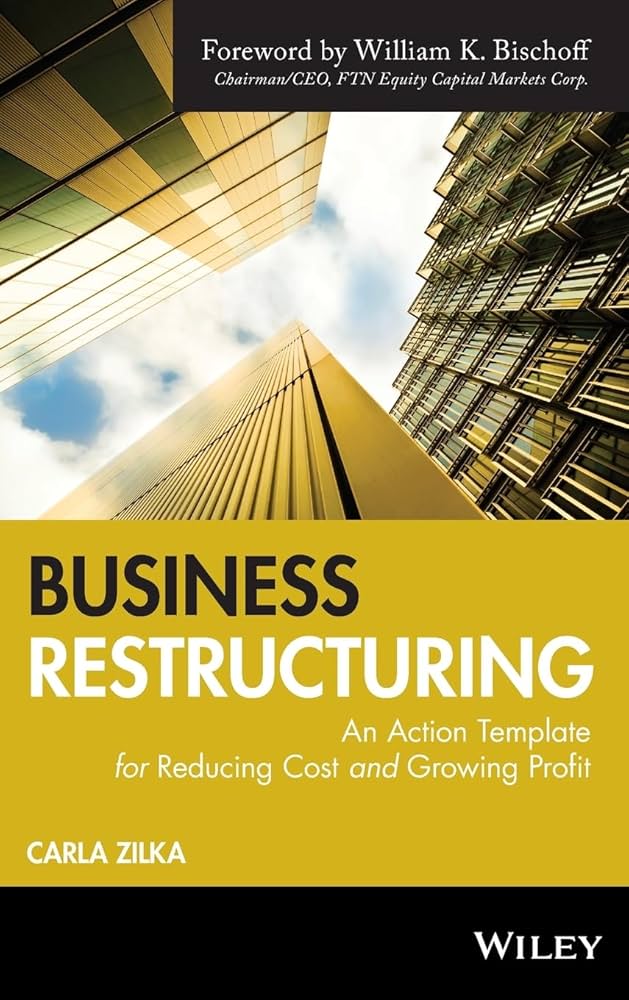
Business Restructuring
by Tom Copeland
📖 About the book
Business Restructuring (drawing from Tom Copeland's work on Valuation and corporate renewal) provides a rigorous, finance-based framework for managing organizations through radical change. Copeland, a former leader of McKinsey's Corporate Finance practice, argues that restructuring should not be a reactive response to a crisis, but a proactive tool for Value Creation. This work serves as a strategic manual for leaders to objectively assess their corporate portfolio and identify the specific operational and financial levers that will maximize shareholder wealth.
The core methodology centers on Valuation-Based Management. Copeland explains how to use Discounted Cash Flow (DCF) analysis to evaluate the worth of individual business units and the potential impact of different restructuring strategies, such as spinoffs, carve-outs, or mergers. He details the importance of Capital Structure Optimization and the trade-offs between debt and equity. The framework emphasizes the need for 'operational restructuring'—improving core processes and reducing costs—to be aligned with 'financial restructuring' to ensure long-term solvency and market leadership.
Essential for CFOs, investment bankers, and turnaround specialists. Readers gain value by learning how to conduct a Strategic Valuation Audit of their organization to identify underperforming assets. Practical applications include utilizing Economic Value Added (EVA) to track the success of restructuring efforts and redesigning executive compensation to align with total shareholder return. By mastering Copeland’s financial lens, leaders can move beyond simple cost-cutting and develop a comprehensive strategy for corporate renewal that delivers measurable financial impact.
💡 Key takeaways
Utilize Valuation-Based Management to objectively identify which business units are creating value and which are destroying it, guiding your divestment and investment choices.
Implement Operational Restructuring by using DCF analysis to prioritize the process improvements that have the greatest impact on your organization's total future cash flows.
Optimize your Capital Structure by balancing debt and equity to minimize your weighted average cost of capital (WACC) while maintaining the flexibility needed for growth.