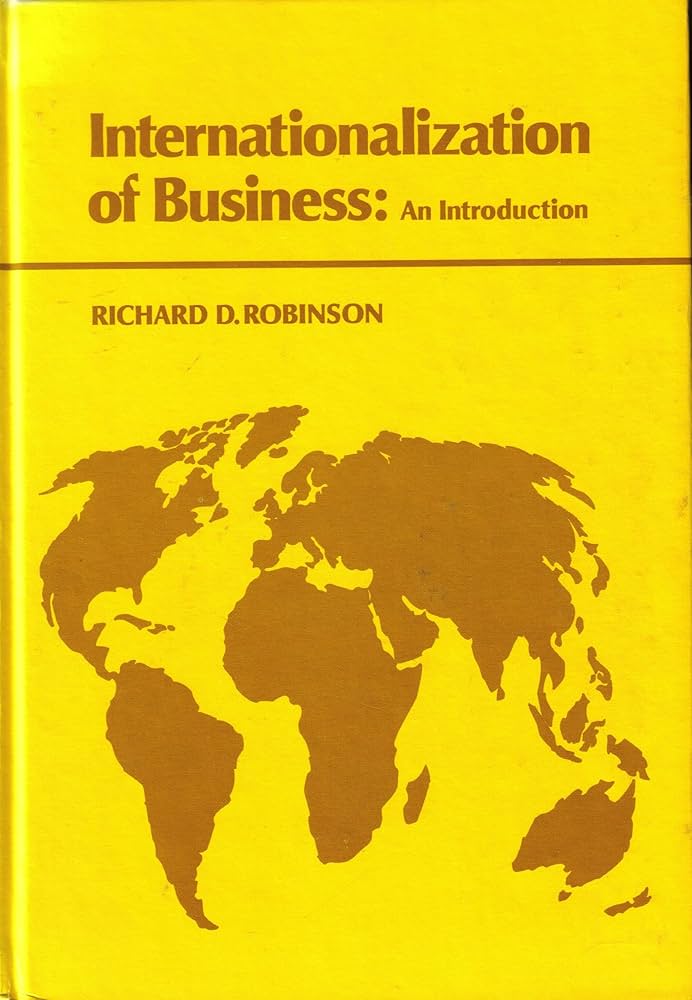
Business Internationalization
📖 About the book
Business Internationalization (reflecting the landmark work Managing Across Borders) by Christopher Bartlett and Sumantra Ghoshal, published in 1989, is the definitive study on the evolution of the multi-national corporation. The authors argue that traditional 'multidomestic' or 'global' models are no longer sufficient in a world that requires both extreme scale and extreme local customization. This book provides the conceptual blueprint for the Transnational Organization—a firm that can think globally and act locally simultaneously, fundamentally changing the nature of international competition.
The core framework is the Integration-Responsiveness (I-R) Grid, which helps managers navigate the trade-offs between global standardization and local differentiation. Bartlett and Ghoshal introduce the Transnational Model, where assets and resources are dispersed but interdependent, and where the corporate center acts as a coordinator rather than a command-and-control hub. They emphasize the role of the Matrix Manager and the importance of fostering a 'transnational mindset' among employees to ensure that the best ideas from any region are leveraged across the entire global network.
Essential for CEOs of multi-national firms, international strategy consultants, and global product leads. Readers gain value by learning how to structure their global operations for maximum efficiency without losing customer relevance. Practical applications include utilizing Cross-Border Teams for innovation and implementing 'shared service centers' to optimize back-office functions. By adopting the transnational approach, leaders can build organizations that are structurally agile and capable of dominating diverse global markets through superior coordination and local insight.
💡 Key takeaways
Utilize the Integration-Responsiveness (I-R) Grid to objectively evaluate the trade-offs between global scale and local customization for each of your organization's product lines.
Transform your global firm into a Transnational Organization where resources are dispersed and interdependent, allowing you to leverage local innovations for global success.
Cultivate a Global Mindset within your leadership team, encouraging managers to look beyond their own regions and identify strategic synergies across your entire international network.